How to Invest in Crypto as a Complete Beginner
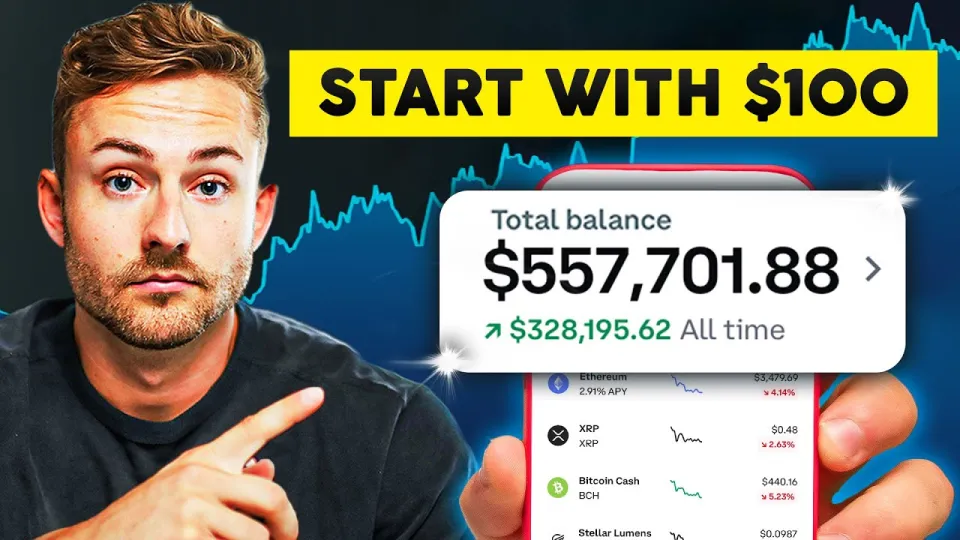
Video: How To Invest in Crypto as A COMPLETE Beginner [2025 GUIDE]
Want articles like this for your own video to promote it on YouTube and Google? Order them through the Telegram bot @sat_sit_bot. Articles with your video embedded are written and posted by the bot itself — on popular topical sites (no ads). Free trial — 50 articles.
· based on the channel Craig Percoco
Key takeaways
- Crypto investing starts with three basics: a wallet or exchange account, a funding method, and a written plan for when you will buy and sell.
- Fundamentals cover what a token does, its supply schedule, team and roadmap; technicals cover price structure, trend and support and resistance levels.
- Most beginners lose money through leverage, oversized positions and chasing breakouts without a tested system.
- A repeatable process means backtesting, journaling every trade, and risking only a small fixed percentage of capital per position.
- Craig Percoco's beginner guide covers crypto basics, fundamentals, technicals, buying and selling, and organization in one walkthrough.
Crypto investing for a complete beginner means buying digital assets through a regulated exchange or wallet, starting with a small amount of risk capital, and following a written plan instead of tips or hype. The practical path is: learn the basics, study a coin's fundamentals and chart, buy in small size, and track every decision. Craig Percoco's beginner walkthrough is a useful starting point, and you can start learning trading for free alongside it.
What crypto investing actually involves for a beginner
Crypto investing is the act of exchanging fiat money or stablecoins for digital assets such as bitcoin, ether or altcoins, and holding them with the expectation of long-term appreciation. Three pieces of infrastructure make it possible: an account on an exchange such as Coinbase or Bybit, a funding method (bank transfer or card), and a place to store the assets, either on the exchange or in a self-custody wallet.
Before buying anything, a beginner should understand a few core concepts:
- Bitcoin is the first and largest cryptocurrency, a scarce asset with a fixed supply cap of 21 million coins.
- Ethereum is a programmable blockchain that hosts smart contracts and most tokens and applications in the sector.
- Altcoins are every coin other than bitcoin, and they carry higher risk and higher volatility.
- Blockchain is the public ledger that records every transaction, which is why transfers can be verified without a bank.
- Tokenomics describes a coin's supply, emission schedule and distribution, and it determines how much dilution holders face.
A beginner does not need to master all of this on day one, but knowing what you own and why it exists is the difference between investing and gambling.
Why the crypto market still attracts long-term investors
The crypto market is small relative to equities and bonds, and that size is exactly why it can move so violently in both directions. A market with a total value in the low trillions can double or halve within a year, while a market measured in the tens of trillions cannot. For an investor with a long horizon, that asymmetry is the entire argument: early exposure to an emerging asset class carries more upside and more risk than a mature one.
That potential comes with real conditions. Crypto has no earnings, no dividends and no central bank backstop, so price is driven by adoption, liquidity and sentiment. Bull runs can produce outsized gains, and bear markets can erase 70–80% of an altcoin's value. Anyone treating crypto as a shortcut to quick wealth is likely to be disappointed; anyone treating it as a small, deliberate allocation within a diversified portfolio is using it as intended.
Fundamentals: how to evaluate a coin before buying
Fundamental analysis in crypto answers one question: does this asset have a reason to exist and to hold value? Start with the token's purpose, then check whether the economics support holders rather than just the founders.
- Use case and demand: what does the token do, and who pays for it?
- Supply schedule: how many coins exist, how many will be created, and on what timeline. High ongoing inflation dilutes early buyers.
- Distribution: how much supply sits with the team, venture investors and early insiders versus the public.
- Team and track record: who is building it, and have they shipped anything before?
- Liquidity: how easily can you exit a position without moving the price?
A coin with a compelling narrative but a heavy unlock schedule is a trap for beginners. A coin with modest hype but steady usage and a transparent supply is usually the safer study. Write the answers down; a thesis you cannot articulate in a few sentences is not a thesis.
Technicals: reading a chart without overcomplicating it
Technical analysis is the study of price and volume to decide when to buy or sell, and for a beginner it comes down to a handful of tools. Open a chart on TradingView, set it to the daily timeframe, and look at three things: trend, levels and volume.
- Trend: is price making higher highs and higher lows, or lower highs and lower lows? Trade with the trend, not against it.
- Support and resistance: these are price zones where buyers or sellers have repeatedly stepped in. They are your reference points for entries and exits.
- Volume: a breakout on weak volume is usually a fakeout, which is one of the most common ways beginners get hurt.
You do not need a dozen indicators. A moving average for trend direction and clean horizontal levels for entries will outperform a screen full of signals, because the goal is a repeatable decision, not a prediction.
How to make money and manage risk in crypto
Money in crypto is made by holding quality assets through cycles and by taking profits according to a plan, not by chasing every move. Position sizing does more for your results than any indicator: if you risk a fixed small percentage of your capital per idea, no single loss can end your account.
Practical rules that separate disciplined investors from the rest:
- Decide in advance how much of your net worth goes into crypto, and never use borrowed money or funds you need for living expenses.
- Avoid high leverage as a beginner; liquidation happens fast in a market that can move 10% in a day.
- Take partial profits on the way up rather than waiting for a perfect top.
- Keep a journal of every trade: entry, exit, reason and outcome. Review it monthly.
- Backtest an idea on historical data before risking real money on it.
Most beginners fail on patience and discipline rather than on knowledge. A simple system followed consistently beats a brilliant strategy applied randomly.
How to buy and sell crypto step by step
Buying crypto takes minutes once an account is set up. The steps are the same whether you use a major exchange or a broker app.
- Create and verify an account on a reputable exchange.
- Deposit fiat by bank transfer, which is usually cheaper than a card purchase.
- Place a market order for a large, liquid asset such as bitcoin or ether, or a limit order if you want a specific price.
- Move larger holdings into a self-custody wallet and back up the seed phrase offline.
- When selling, use limit orders to control the price and check withdrawal fees before moving funds.
Fees matter more than beginners expect: trading fees, spread and withdrawal costs compound over many transactions. Selling is also a taxable event in most jurisdictions, so keep records from the first purchase.
Common beginner doubts and how to handle them
Skepticism about crypto is healthy, and the most frequent beginner concerns have straightforward answers. The first is fear of losing money: the response is to start small, size positions so a total loss is survivable, and learn on bitcoin and ether before touching smaller altcoins. The second is information overload: pick one source, one charting tool and one exchange, and ignore the rest until the basics are automatic.
The third is the temptation to copy other people's trades. Copying a position without understanding the thesis means you will not know when to exit, which is where most losses occur. The fourth is impatience: expecting weekly gains leads to oversized bets and leverage, the two fastest routes to a wiped account. Treat the first year as tuition, keep the amounts small, and measure progress by how well you follow your process rather than by profit.
All resources from the guide
- Free trading education: https://bit.ly/3VHSOeT
- Crypto trading course and private team: https://bit.ly/3xhn47c
- Discord community access: https://bit.ly/3VmrO3r
- All resources: https://bit.ly/3zeM13u
- TradingView charting: https://bit.ly/3Xf9uvz
Final takeaways on starting with crypto
Crypto investing rewards preparation more than enthusiasm. Learn what you are buying, read the chart, size positions so that being wrong is affordable, and keep a record of every decision so experience turns into skill. The market's volatility is the source of its opportunity and the reason discipline matters, so treat your first positions as education rather than a lottery ticket. Craig Percoco's beginner breakdown covers the same path from basics to execution, and you can start learning trading for free to build the foundation before committing capital.
Source: How To Invest in Crypto as A COMPLETE Beginner [2025 GUIDE] · Markdown version
Questions & answers
How much money do I need to start investing in crypto?
You can start with a very small amount, often the equivalent of $20–$100 on major exchanges, because bitcoin and ether are divisible into tiny fractions. What matters more than the amount is that the money is risk capital you can afford to lose entirely. Beginners typically do better starting small and increasing size only after they have followed a written plan consistently for several months.
Do I need a mentor or a paid course to trade crypto?
No, but structure matters more than the source. A beginner without any framework tends to overtrade, use leverage too early and abandon rules after the first loss. Free education, a demo account and a trade journal cover most of what a paid course provides; paid programs are worth it only if they include real-time feedback and a track record you can verify.
Why do most beginners lose money in crypto?
The usual causes are a lack of a system, impatience, poor risk management and no record of past trades. Oversized positions and leverage turn ordinary volatility into liquidation, and chasing breakouts on thin volume produces repeated small losses. Traders who backtest an idea, risk a fixed small percentage per position and journal their results tend to survive long enough to improve.
Is it better to buy bitcoin or altcoins as a first investment?
Bitcoin and ether are the usual starting points because they are the most liquid and have the longest track records, which makes them easier to study and to exit. Altcoins can outperform in a bull market but carry higher risk, including dilution from token unlocks and much deeper drawdowns. A common approach is to hold the majority of a crypto allocation in the largest assets and treat smaller coins as a limited, optional satellite.